
Lake Manyara is often dismissed as a half-day add-on between Arusha and the Ngorongoro Crater. That is a significant underestimation. In a single morning, you can move from dense ground water forest where forest elephants browse at eye level, to open acacia woodland where tree-climbing lions lounge in the branches, to the alkaline lake shoreline where half a million flamingos turn the water pink.
The park’s compact size — 325 square kilometres — means the ecological transitions happen fast and dramatically. An experienced guide who knows where to look on any given day makes the difference between a good morning and an extraordinary one.
From Marangu, Manyara is a natural first or last stop on a Northern Circuit itinerary — a compact, diverse park that consistently over-delivers on what guests expect.
Biosphere Reserve — Lake Manyara was designated a UNESCO Biosphere Reserve in 1981 for its extraordinary ecological diversity — from montane forest to alkaline lake within a single compact park.
01 / Ground Water Forest
Dense fig, mahogany and fever tree forest fed by underground springs from the Great Rift escarpment above. Forest elephants move at canopy level here, and enormous baboon troops dominate the undergrowth.
Forest elephant and 400+ bird species
02 / Acacia Woodland
The legendary tree-climbing lions of Manyara are typically found resting in the acacia woodland zone — their unusual habit thought to be an adaptation to avoid insects and benefit from lake breezes at height.
Tree-climbing lions — a globally unique behaviour
03 / Open Floodplains
The open floodplains between forest and lake shore hold large hippo pools, stalking wading birds, and buffalo herds grazing at the water’s edge. Wildebeest and zebra move through here during the wet season.
04 / The Alkaline Lake
Lake Manyara itself covers 230 of the park’s 325 square kilometres. When flamingo numbers peak, the lake shoreline turns completely pink — one of the most visually striking scenes in all of African wildlife photography.
Lake Manyara rewards visits at any time of year, though the experience changes significantly between seasons. Select a month to understand current conditions.
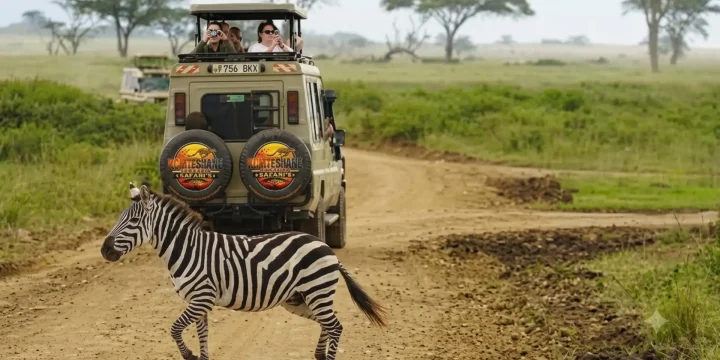
Manyara is a single-road park — one entrance, one exit, and the same tarmac road that every vehicle drives. The difference between guides is knowing when to stop, where to look, and which time of day to prioritise each ecological zone.
We time Manyara visits for the early morning forest elephant encounter, then move through the acacia woodland during the mid-morning lion sighting window, reaching the lake shoreline as flamingo flocks are most active in the late morning light.
We also strongly recommend combining Manyara with a night in Karatu — the highland coffee farming town above the park — for a completely different cultural and culinary experience between safari days.
Enter the park at opening and drive slowly through the groundwater forest. Forest elephants browse the undergrowth at close range. Giant baboon troops cross the road. The birdlife here alone justifies the early start.
Move into the acacia woodland zone to search for the tree-climbing lions. Your guide knows their typical resting trees. If they are not in the trees, they are hunting on the floodplains. We stay until we find them.
The lake shoreline is at its most active mid-morning as the light becomes perfect for photography. Flamingo flocks are often visible in their thousands along the alkaline shallows. Pelicans, African fish eagles, and marabou storks line the water's edge.
Bush lunch at the picnic site near the hippo pool. An afternoon spent watching the hippos, monitoring crocodile activity, and enjoying the extraordinary birdlife around the pool edges. Buffalo and giraffe often arrive to drink in the afternoon.
Exit the park in late afternoon and drive up the dramatic escarpment road for sundowners above the park — watching the lake change colour as the sun drops. Manyara pairs naturally with Ngorongoro the following day.
The tree-climbing behaviour of Manyara's lions is globally unusual — only shared with Uganda's Ishasha lions in Queen Elizabeth National Park. The most accepted theory is that they climb to escape insects and benefit from cooling lake breezes at height. Sightings are not guaranteed but are reported year-round, with early morning being the most reliable window.
Typically, a single full-day game drive or a combination of an afternoon drive followed by a morning drive the next day is perfect. Because of its compact size, this gives you ample time to explore the groundwater forest, navigate the lakeside floodplains, and track the resident wildlife before moving on to larger ecosystems like Ngorongoro or the Serengeti.
Yes, family safaris are incredibly safe provided you book with experienced guides and stay at family-friendly lodges. Modern safari vehicles are sturdy, enclosed, and custom-built for safe viewing. Guides are expertly trained to read wildlife behavior and maintain safe, respectful distances from all animals at all times.
Malaria is present in low-lying safari areas across East Africa. We highly recommend consulting your doctor or a travel clinic well before your trip to get proper prophylactic medication. Additionally, wear long sleeves and trousers at dawn and dusk, use high-quality insect repellent, and utilize the mosquito nets provided by your lodges.
Public national parks are subject to strict park regulations, meaning vehicles must stay on designated paths and day visitors must exit before sunset. Private concessions are exclusive wildlife territories bordering the parks; they allow special tracking privileges like guided bush walks, off-road game drives for close-up wildlife encounters, and thrilling night game safaris.
Yes, all relevant conservation costs, national park entry concessions, and local vehicle tracking government fees are fully included in our custom-tailored safari prices. We believe in complete pricing transparency so you can relax without worrying about hidden administrative fees or surprise costs at the park gates.
Conveniently positioned for both Lake Manyara and Ngorongoro visits.
Escarpment rim lodge with elevated views over the Rift Valley.
From / 2 Pax
Per Person
From / 2 Pax
Per Person
From / 2 Pax
Per Person
From / 2 Pax
Per Person
From / 2 Pax
Per Person
From / 2 Pax
Per Person