
Tarangire National Park is widely considered the Northern Circuit’s best-kept secret and a premier elephant capital. The park is defined by the Tarangire River — the only permanent water source in a vast semi-arid landscape. During the dry season, virtually every large mammal in the wider ecosystem converges on its banks, producing immense game concentrations.
Location & Access — Roughly 2 hours' drive from Arusha and 2.5 hours from Marangu, via the village of Kwa Kuchinja.
01 / Main Entrance Area
An area of open acacia woodland following the Tarangire River where massive elephant herds move continuously between the water source and the grasslands.
02 / Tarangire River Zone
The dry-season lifeblood of a 30,000 km² ecosystem, featuring buffalo herds 1,000 strong, crocodile-lined riverbanks, and active lion prides.
03 / Silale Swamp
Located in the south, the Silale and Gurusi swamps hold large buffalo herds, elephants, and spectacular year-round birdlife.
04 / Baobab Forest
Home to one of the world’s greatest concentrations of ancient baobab trees, some estimated to be over 1,000 years old.
Tarangire follows two broad seasons: a peak dry season (June–October) when the river draws in the wider ecosystem, and a green season (November–May) of lush scenery and migratory birdlife. Select a month to see what to expect.
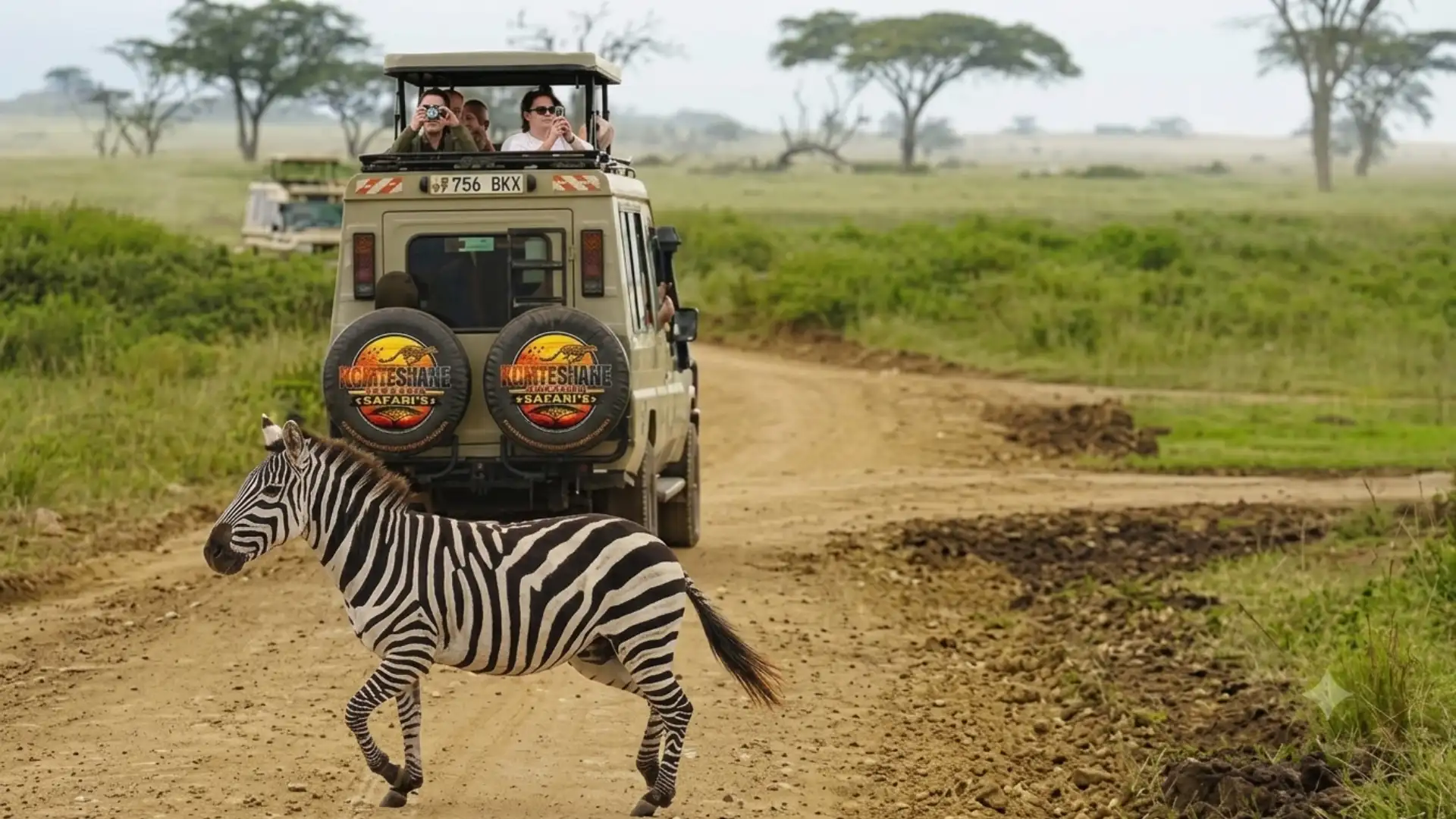
Most day-trippers see only the northern river sections near the main gate. The difference is pushing south, past the crowds, into the Silale Swamp wilderness where 500-strong buffalo herds and exceptional birdlife go largely unwatched.
We build in a guided walking safari through the ancient baobab forest — a unique activity permitted in Tarangire’s wilderness concession areas — and reserve the second morning’s river drive for the moment elephant herds are most active at the water’s edge.
Arrive by midday via Arusha or Marangu. Experience initial elephant sightings on your way to camp, followed by an afternoon game drive along the river before sundowners.
Catch large elephant herds arriving at the riverbanks at first light. Tree-climbing lions are also regularly spotted in the sausage trees along the riverbank.
Explore the ancient baobab forest on foot accompanied by an armed ranger guide — a unique activity permitted in Tarangire's wilderness concession areas.
Push south toward the Silale Swamp away from tourist crowds to witness 500-strong buffalo herds and exceptional birdlife.
Enjoy a final morning game drive along the river before departing onward to Ngorongoro, Lake Manyara, or returning to your departure point.
June to October is the undisputed peak dry season, concentrating thousands of animals along the river. However, the green season (November–May) offers lush emerald scenery, exceptional birdwatching as migratory species arrive from Europe, and far fewer safari vehicles.
It is roughly a 2-hour drive from Arusha and a 2.5-hour drive from Marangu. Because it is the closest major Northern Circuit park to both departure points, it is typically chosen as the opening park for overland itineraries.
Public national park zones require all vehicles to stay strictly on designated tracks and return to camp by 6:00 PM. Private border concessions permit off-road tracking, night spotlight game drives, and guided walking safaris, creating a more flexible and immersive wilderness experience.
Yes. All TANAPA national park entrance fees, conservation levies, and vehicle gate permits are fully included transparently in the upfront quote.
Pack neutral-coloured clothing (khaki, olive, beige). Avoid pure white or bright colours, as well as dark blue or black, which can attract tsetse flies. Bring a wide-brim hat, high-grade sunscreen, a light fleece for brisk early morning drives, binoculars, and a camera. If using light aircraft transfers, luggage must be restricted to soft-sided duffel bags under 15kg.
A well-run, reliable overnight base option.
A premium camp seamlessly incorporated into multi-destination circuit itineraries.