Mkomazi National Park is one of Tanzania’s least-visited gems, and one of its most important conservation stories. First protected as a game reserve in 1951, it was nearly emptied of black rhino and elephant by poaching before a 1989 restoration programme brought both species back from the brink. Today, in a single visit, you can track wildlife across dry nyika bush and ancient baobab country, then enter the guarded Rhino Sanctuary for one of the most reliable black rhino sightings anywhere in East Africa — all with a fraction of the vehicle traffic of the Northern Circuit’s bigger parks.
Key Distinction — Home to the Mkomazi Black Rhino Sanctuary and one of Africa's longest-running African wild dog breeding programmes. Roughly 3 hours' drive from Arusha and 2.5 hours from Moshi, via the town of Same.
01 / Zange Gate & Northern Plains
The main entrance area, opening onto sweeping nyika shrubland and scattered acacia woodland. Most accommodation clusters here, and it’s the starting point for game drives, walking safaris, and trips to the rhino sanctuary.
02 / Dindira Dam
The park’s primary water source and single most important wildlife viewing location. Elephants, zebras, giraffes, and antelope concentrate here, especially in the dry season when other water sources disappear.
03 / The Rhino Sanctuary
A heavily protected, fenced sanctuary split into two areas — the public Mbula Rhino Reserve and the private, ground-level Kisima hide — where black rhinos and the resident wild dog breeding programme are closely guarded and monitored.
04 / Southern Hills & River Valleys
Rolling hills and rocky outcrops bordering the Pare and Usambara mountains, cut through by the seasonal Umba and Mkomazi rivers and dotted with ancient baobabs — prime territory for guided walking safaris.
Mkomazi follows two broad seasons: a peak dry season (June–October) when wildlife concentrates around Dindira Dam, and a wet season (November–May) of green hills and migratory elephants from Tsavo. Select a month to see what to expect.
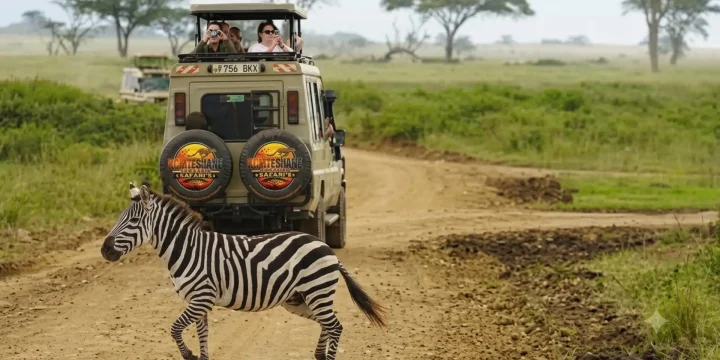
Most visitors treat Mkomazi as a quick stop en route to the Usambara Mountains. The difference is building in enough time for both rhino reserves — the public Mbula sanctuary and the private, ground-level Kisima hide — plus a guided walking safari through baobab country that day-trippers rarely have time for.
We schedule the rhino sanctuary visit around the cooler, thinner-vegetation hours of morning and reserve the afternoon for Dindira Dam, when the heat pushes elephants and buffalo back to the water’s edge.
Depart Arusha or Moshi and drive south via Same to the Zange Gate entrance, arriving as the park's wildlife is still active in the cool morning air.
Head straight for Dindira Dam, the park's primary water source, to look for elephant, giraffe, zebra, oryx, and the elusive gerenuk gathered at the water's edge.
Transfer into the guarded Rhino Sanctuary with an accompanying park ranger to track black rhinos at close range, and learn about the ongoing wild dog breeding programme.
A picnic lunch at a designated site with sweeping views toward the Pare and Usambara Mountains, and Kilimanjaro visible on clear days.
A final afternoon game drive before departing the park and driving back to Moshi or Arusha, arriving by early evening.
Mbula Rhino Reserve is managed by TANAPA and open to the general public, offering near-guaranteed rhino sightings from a safari vehicle. Kisima is a private, ground-level hide experience with a smaller number of visitors, giving a more intimate encounter but requiring a dedicated half-day excursion.
The dry season from June to October offers the best general wildlife viewing, as thinning vegetation concentrates animals around Dindira Dam. The wet season from November to May is greener and cooler, with dramatic mountain views and the seasonal elephant migration arriving from Kenya's Tsavo ecosystem.
It's roughly a 3-hour drive from Arusha (around 200km) and 2.5 hours from Moshi (around 120km), via the town of Same. Because of the distance, it's often paired with the Usambara Mountains or visited as a day trip rather than a standalone fly-in destination.
Free-roaming wild dog packs do pass through the wider park, but sightings in the open bush are uncommon. The more reliable way to see them is through the breeding programme enclosures within the rhino sanctuary, where captive packs are closely monitored.
Yes, for a very different kind of experience. Mkomazi trades sheer wildlife density for rarity, solitude, and species you won't easily find elsewhere in Tanzania, such as oryx and gerenuk, plus one of the country's best chances of seeing black rhino up close.
Pack neutral-coloured clothing (khaki, olive, beige), a wide-brim hat, high-grade sunscreen, a light layer for cooler mornings, binoculars, and a camera. Avoid pure white or bright colours, as well as dark blue or black, which can attract insects.
Comfortable, reliable overnight options in and around Same town, close to the Zange Gate entrance.
The park's dedicated in-park lodge, with sweeping views over the Mkomazi wilderness.
From / 2 Pax
Per Person
From / 2 Pax
Per Person
From / 2 Pax
Per Person
From / 2 Pax
Per Person
From / 2 Pax
Per Person
From / 2 Pax
Per Person